François Coty and the perfume you could afford
He is remembered for Chypre, which named a whole family. What he actually changed was who perfume was for, and what it was allowed to be made of.
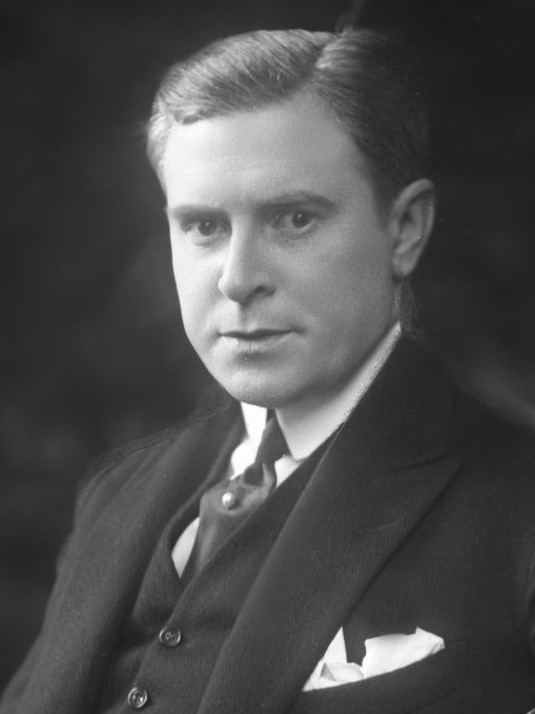
If you have ever bought a perfume without thinking of it as a luxury, you are standing at the end of an argument Coty won.
He was born Joseph Marie François Spoturno in Ajaccio, Corsica, in 1874. He took the name Coty, opened a perfume house in Paris in 1904, and died in 1934 running one of the largest fragrance businesses in the world. The histories hand him Chypre, from 1917, and they are right to: that one bottle gave its name to a whole family of perfumes, and the family still carries it.
But the perfume is not the change. The change is three decisions, and every one of them is still sitting on your bench.
One: he built for volume
Branded bottles were not new in 1904. Houbigant had been selling Fougère Royale since 1882 and Guerlain had Jicky from 1889. What Coty did was treat perfume as something to manufacture rather than something to compound, one customer at a time, in a shop.
That sounds like a business decision and it is, but it is also a formulation one, because volume changes the arithmetic of everything. At twenty bottles the glass costs more than what goes inside it. At a thousand it does not. The bottle-cost post works that through with numbers, and the numbers are the reason a perfume can be beautiful and inexpensive at the same time, but only if enough people want it.
Two: the bottle was part of the perfume
He commissioned René Lalique, a jeweller and glassmaker, to design bottles and labels for him. Not to decorate the object afterwards, but to make it. That is the moment the flacon stops being a container and starts being an argument for buying the thing inside.
Nothing about this is nostalgia. It is why your first hundred bottles are the hardest part of a small brand, and why the pump that does not fit the neck is the commonest expensive mistake anybody makes.
Three: synthetics, with no apology
By 1904 the chemistry was already on the price list. Coumarin had been synthesised in 1868, vanillin in 1874, the ionones in 1893. Coty built on them openly at a time when a house could still have chosen to pretend otherwise, and L'Origan, from 1905, is the one usually described as resting on methyl ionone.
Here is what those materials look like in the library, so you can see why a perfumer reached for them and what the same choice costs you today.
| Material | Lasts | Usual dose | IFRA, category 4 |
|---|---|---|---|
| Methyl ionone gamma | 10 hours | 0.2–6 % | 30 % |
| Coumarin | 14 hours | 0.1–4 % | 1.5 % |
| Vanillin | 18 hours | 0.05–3 % | No restriction |
| Labdanum absolute | 16 hours | 0.2–5 % | No restriction |
| Oakmoss absolute low-atranol | 18 hours | 0.05–1.5 % | 0.1 % |
Doses are per cent of the concentrate. IFRA limits are per cent of the finished product, which is not the same number and catches people out constantly.
What you cannot rebuild
A 1917 formula was written with no safety standard over it, and two of its load bearing materials are now capped hard.
Oakmoss is the chypre backbone and it is held at 0.1 % of the finished perfume. Spray at 20 % concentration and that is about half a per cent of your oil, in the lower third of the library's own working range. The IFRA categories post explains why the ceiling moves with what you are making.
Nitro musks are the other one. Musk ketone carries the sweet powdery weight behind a great many vintage bases; it now sits under a 1.4 % ceiling that comes from EU cosmetics law rather than from IFRA, and musk xylene is banned outright. What a musk is covers the family.
So you can study these perfumes. You cannot copy them out.
Two stories worth doubting
The first is the smashed bottle: Coty, rejected by a department store, drops a flacon of La Rose Jacqueminot on the floor, shoppers smell it, the shop buys the lot. It is repeated everywhere and sourced almost nowhere. Treat it as a good story.
The second is not even his, but it has the same shape. Chanel No 5 arrived in 1921, made by Ernest Beaux, and the tale usually told is that a lab assistant overdosed the aldehydes by accident. That account is disputed, and the dull version is more useful: aldehydes were a known, catalogued, purchasable class, and somebody chose how much to use.
Perfume history likes the lucky accident. The bench does not run on them.
Build a period-shaped base and watch it argue with you. Oakmoss at 0.5 %, labdanum at 2 %, coumarin at 1 %, vanillin at 0.5 %, methyl ionone at 3 %. Check the safety panel, then push the oakmoss to 1 % and check again. That gap between the smell you want and the number you are allowed is the whole of modern formulation.
Open the bench →The rest of the record
Coty bought Le Figaro in 1922 and founded a daily of his own, L'Ami du Peuple, in 1928. What he did with those newspapers in the last years of his life is documented, and it is not a perfumery story. It is worth knowing that it exists rather than being surprised by it later.
The perfumery change stands on its own, and it cuts both ways. A shelf where everyone can afford something is also a shelf where a great many bottles sound alike. That is the same decision seen from the other side, and it is still being made, every time somebody works out what a formula can cost.