Ernest Beaux and the aldehyde overdose
Three aldehydes, an odour impact of 8.5, a working window that closes at a third of a per cent, and no IFRA limit at all. What Chanel No 5 teaches about dosing.
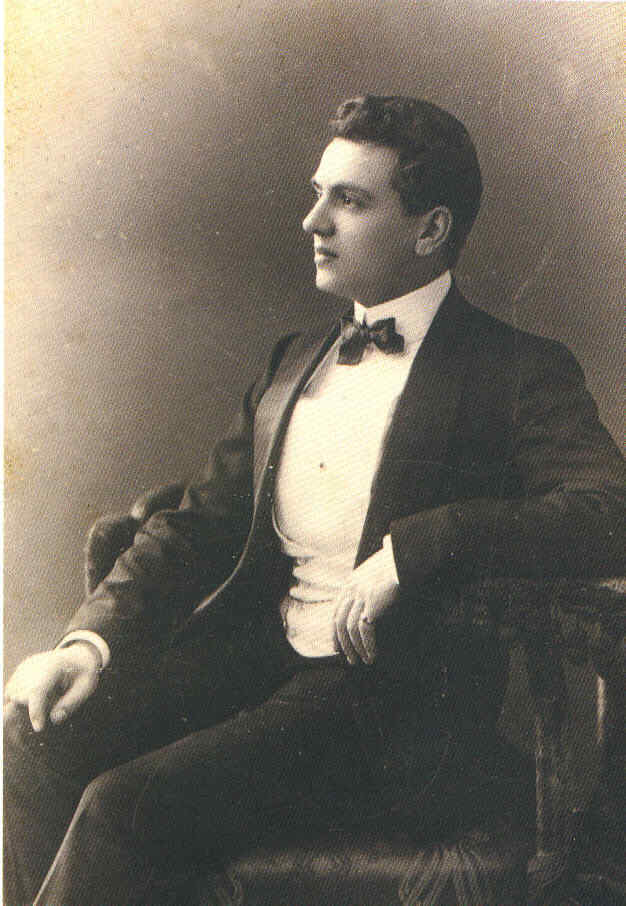
Ernest Beaux was born in Moscow in 1881 and died in 1961. He worked at A. Rallet and Company, the Moscow perfume house, and after the revolution he left Russia for the south of France. In 1921 he composed Chanel No 5 for Gabrielle Chanel. Chanel No 22 followed in 1922, Bois des Îles in 1926, and Cuir de Russie somewhere in the same decade. Sources date that one 1924 or 1927, so it is given here without a year. That is most of what is documented about him, and for a perfumer it is enough.
The useful thing in No 5 is not the legend. It is a dosing decision, and you can examine it on your own bench this afternoon.
What the aldehydes actually are
Three fatty aldehydes are named in almost every reconstruction of No 5: C-10 decanal, C-11 undecylenic and C-12 MNA. Nobody outside the house has the formula, so treat any proportion you read as somebody’s estimate. The materials themselves are not estimates. They are ordinary catalogue items, and this is how they behave.
| C-10 decanal | C-11 undecylenic | C-12 MNA | |
|---|---|---|---|
| Family | Aldehydic | Aldehydic | Aldehydic |
| Odour impact | 8.5 of 10 | 8.5 of 10 | 8.5 of 10 |
| Tenacity | 2 hours | 2.5 hours | 3 hours |
| Working dose | 0.005–0.4 % | 0.005–0.4 % | 0.005–0.35 % |
| IFRA | No restriction | No restriction | No restriction |
Those figures come from the Crafted Scent library, where every material sits on the same scale and can be compared rather than merely quoted. What aldehydes actually do takes the whole family in turn, if you want the materials rather than the history.
Read the dose row again. The window opens at five thousandths of a per cent. A material with an odour impact of 8.5 is normally handled the way you would handle a trumpet in a small room, which is carefully. The window closes at about a third of a per cent, and most people never go near that end of it.
The aldehydic classics live at that end. Not beyond the window, but at the top of it, and with three aldehydes stacked rather than one carrying the whole effect. Stacking is half the trick. Three materials at 0.1 per cent each smell rounder, and far less like a single chemical, than one at 0.3.
Note the last row. There is no IFRA restriction on any of the three, at any dose. The restraint a perfumer shows with aldehydes is entirely self-imposed. When you use 0.02 per cent because more feels reckless, the rule you are obeying is a rule about taste.
What the overdose costs
Aldehydes are loud and short. Two to three hours of tenacity, against 24 for Sandalwood Mysore and 26 for Vetiver Haiti. The entire aldehydic effect is spent before lunch.
That is the structural point and it is the one most often missed. A loud opening is only survivable if what it uncovers is worth arriving at. Under the aldehydes in No 5 sits a floral heart and a long base, and the materials the reconstructions name carry their own arithmetic: jasmine grandiflorum absolute has an IFRA limit of 0.6 %, ylang ylang extra 0.73 %. Musk ketone, the nitro musk behind many bases of that period, holds for 16 hours and is now capped at 1.4 % by EU cosmetics law rather than by IFRA.
The story about the lab assistant
The famous version says an assistant misplaced a decimal point, added ten times the intended aldehyde, and Chanel picked that sample by accident. It is repeated everywhere and it rests on no source anybody has produced. Treat it as a story rather than a fact, for three reasons.
- Beaux already knew what aldehydes did. He had used them at Rallet, in the perfume later reissued as Rallet No 1. Whether that perfume is an early draft of No 5 is genuinely argued about. That he understood the materials is not.
- A submission is a set of variants. They are smelled side by side, which is exactly the method that finds a tenfold error.
- A formula is written down and remade. A mistake survives one bottle. It does not survive a production run.
The likelier account is the dull one. A perfumer who knew the material chose a high dose on purpose, and kept it. The accident is told instead because an accident is a better story than a decision.
Take a simple floral you have already built. Add aldehyde C-11 undecylenic at 0.02 per cent, near the bottom of the window, and smell it on a blotter after ten minutes. It reads as a faint waxy oddness, like something gone slightly wrong. Now build the same formula at 0.25 per cent and smell that. The material has not changed. What changed is whether it sounds like a fault or like the subject.
Open the bench →What is worth copying
Not the aldehydes. They have been borrowed so often that a heavy aldehydic top now says 1921 as plainly as a heavy Ambroxan base says 2015. What is worth copying is the nerve.
Most beginner formulas fail in the same direction. Everything is used at the dose that feels safe, nothing is used at the dose that makes a point, and the result smells careful and says nothing. Pick one material. Take it to the top of its working window, check it against IFRA for your category, and leave it there. That is the whole lesson of No 5, and it survives without a single anecdote.