Making a tincture: weaker than you expect, and worth it anyway
One part material to nine parts alcohol, three months in a cupboard, and a jar that will never match the absolute. The ratio, the wait, and what a tincture is actually for.
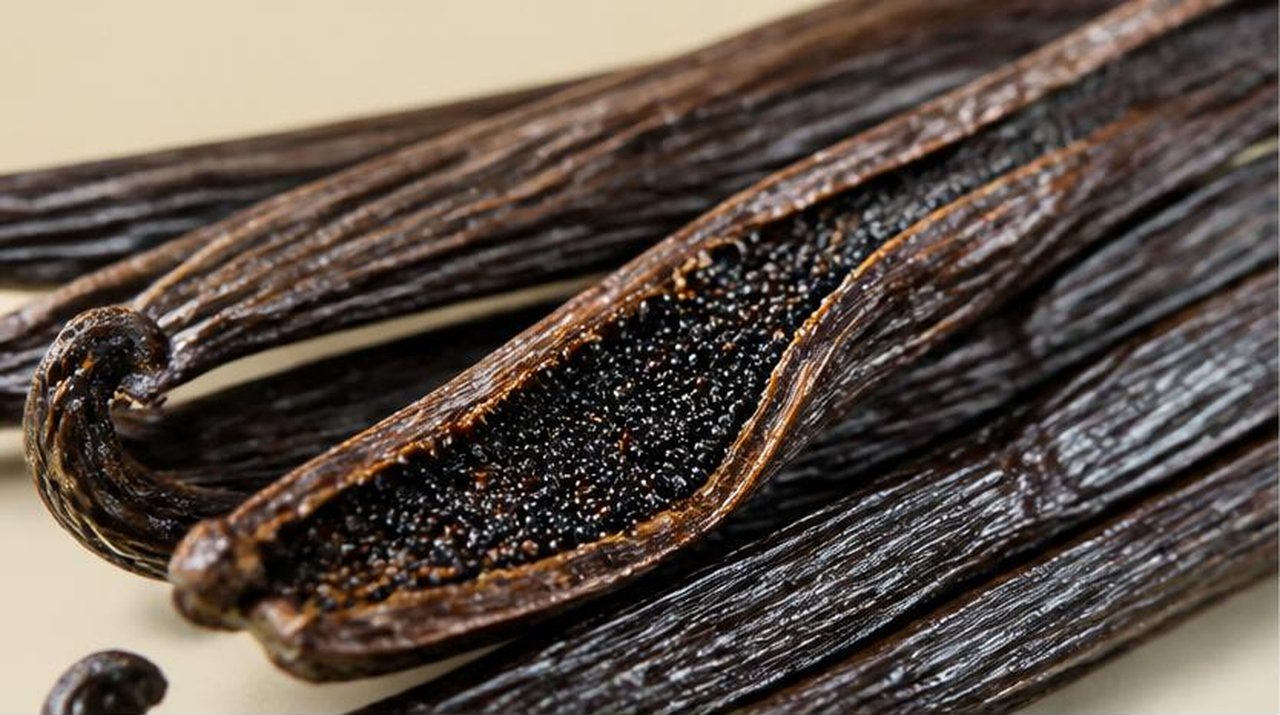
Start with the ratio, because everything else follows from it. One part material to nine parts alcohol, by weight. Ten grams of chopped vanilla pod into ninety grams of ethanol is a 10 per cent tincture. Weigh both, because drops are a lie at this scale as much as any other. Then write it on the jar with the date. A jar labelled “vanilla, 10 %, 13 September” is a material you can dose. A jar labelled “vanilla” is a mystery you will throw out in a year.
A tincture is the simplest extraction there is. The alcohol dissolves what it can, leaves the rest, and at the end you filter out the solids and keep the liquid. No heat, no vacuum, no still. That is why it is the one extraction you can do at a kitchen table, and why it is the weakest thing in your cupboard.
The alcohol, and the wait
The bench offers four strengths. The one most benches have is perfumer’s ethanol at 96 per cent, density 0.807. Absolute alcohol at 99.9 costs more and does no better here; ninety per cent is fine. What you cannot use is anything that smells of itself: no vodka, no rubbing alcohol, no denatured spirit with a bitterant in it.
Fill a glass jar, lid down, in a cupboard rather than on a windowsill. Shake it daily for the first week and weekly after that. Six weeks is the earliest it is worth smelling properly. Three months is about where it stops changing. Then filter it through paper and expect to lose a little to the filter and the pulp; the bench allows 3 per cent for filtration by default, and a tincture loses that order too.
Now the arithmetic
From the library:
| Vanilla absolute | Vanillin | Ethyl vanillin | |
|---|---|---|---|
| Odour impact | 6.5 of 10 | 8 | 9 |
| Working dose | 0.2–6 % | 0.05–3 % | 0.02–1.5 % |
| Tenacity | 20 hours | 18 hours | 18 hours |
| IFRA | No restriction | No restriction | No restriction |
Your tincture is one tenth material by weight, and the alcohol did not get all of that tenth out of the pod. It therefore carries well under a tenth of the odorant the same weight of absolute carries. To match 1 per cent of vanilla absolute you need more than 10 per cent of your tincture: a tenth of the whole concentrate on one note, arriving with nine parts alcohol that have to be counted in the dilution arithmetic. Then look at the last column again. Two hundredths of a gram of ethyl vanillin in a hundred is a working dose.
What it is actually for
Three things, and strength is not one of them.
- Materials nobody sells as an extract. The library carries Castoreum tincture in its own right, because a tincture is how that smell is available at all. The same holds for whatever you own and the shops do not list: resin somebody brought back, beeswax from a local hive, cocoa nibs.
- Solubility. Benzoin Siam arrives as a thick, sticky balsam that will not go through a pipette or weigh out cleanly at half a per cent. In alcohol it becomes a liquid you can dose. Nothing got stronger. It got usable.
- Learning. Put your tincture, Vanillin and Vanilla CO2 on three blotters and smell them together. The library separates them for a reason: the absolute reads vanilla, boozy, balsamic, sweet; the vanillin sweet, creamy, powdery; the CO2 cleaner and less alcoholic than the absolute. Your nose finds the gap faster than any description of it.
So use the jar at two or three per cent, behind a proper vanilla rather than as the vanilla. It brings the balsamic, faintly boozy edge the crystal does not have, and it will not carry the note alone. Asking it to is how most first tinctures get judged a failure.
Put Vanilla absolute on the bench at 2 per cent and look at the weigh-out sheet. Then work out what weight of your own 10 per cent tincture delivers the same material, and where that leaves the other ninety grams. That figure is usually the moment a tincture becomes a seasoning rather than an ingredient.
Open the bench →One honest note about safety
Vanilla carries no IFRA restriction at any dose, which is part of why it makes a good first tincture. That does not generalise: a limit follows the molecule, not the jar. Tonka bean absolute is roughly 35 per cent coumarin by weight, and coumarin is capped at 1.5 per cent of the finished product for fine fragrance on skin under the 51st Amendment, counted across every source at once. A home tonka tincture carries that coumarin and gives you no way of knowing how much came out of the beans. Keep your own tinctures to unrestricted materials and buy the restricted ones from somebody who can tell you what is in them. The categories post covers how those limits are read.