Three vetivers, one grass: Haiti, Java and Bourbon
Same plant, same registry number, three different smells. Two of them last twenty-six hours and the expensive one lasts fourteen. Which to buy first, and why.
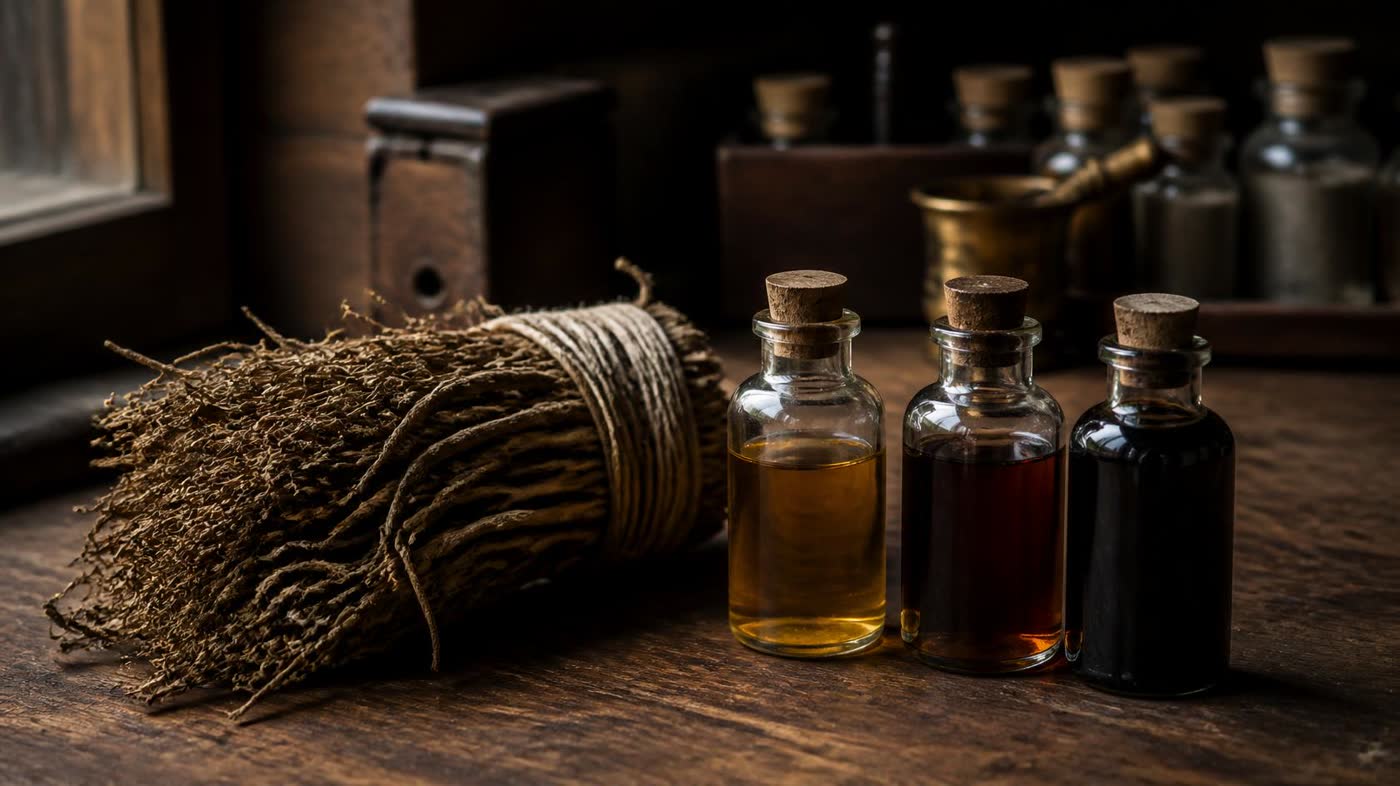
If you are buying one vetiver, buy Haiti. It is the widest, most forgiving version of the material, and the numbers below say why. The rest of this is about what the other two do that Haiti does not, and whether the money is worth it.
All three come from the roots of the same grass, dug up, washed, dried and steam distilled. The oil sits at the heavy end of the range, so none of them is a top note. What you get is a base that smells of damp earth, of smoke, and in some grades of grapefruit peel from an odd angle.
What the library says
| Haiti | Java | Bourbon | |
|---|---|---|---|
| Substantivity | 26 hours | 26 hours | 14 hours |
| Volatility | 32 | 32 | 46 |
| Odour impact | 7 of 10 | 7.5 of 10 | 6.5 of 10 |
| Working dose | 0.5–10 % | 0.3–8 % | 0.2–8 % |
| IFRA | No restriction | No restriction | No restriction |
Doses are per cent of the concentrate, before alcohol. None of the three carries an IFRA category 4 limit and none of them carries a restricted constituent, so at the bench the dose is an aesthetic decision rather than a compliance one. That is rare for a natural this powerful, and worth knowing before you spend an evening reading the categories.
Haiti and Java are the same length and not the same smell
Look at the first two rows again. Identical volatility, identical substantivity. Twenty-six hours is longer than Ambroxan, which the library puts at twenty-two. Whatever else separates Haiti from Java, it is not staying power.
What separates them is character. The library files Haiti with a grapefruit facet and Java with a leather one, and Java hits harder: 7.5 against 7. Its working window is the narrower of the two, 0.3 to 8 % where Haiti runs 0.5 to 10. Java is the smokier, heavier, more single-minded oil. At three per cent it will take over a formula that Haiti would only have furnished.
Java is not a cheaper Haiti. It is the one to reach for when you want smoke and hide rather than earth and citrus peel.
Bourbon is the refined one, and the short one
Bourbon vetiver comes from Réunion, and the library calls it the most refined grade of the three. It is also the one that behaves least like the others: volatility 46 against 32, and fourteen hours of substantivity against twenty-six.
Close to half the tenacity, and the only one of the three the library marks costly. That is not a fault. Cleaning the heavy, rooty end out of a vetiver is what makes it elegant, and that heavy end is also what kept it on the skin until tomorrow. You are buying polish and paying in hours, which makes Bourbon a poor first vetiver and a very good second one. Buy it when Haiti is muddying a formula, not to learn the material on.
Is the difference worth the money
The studio will not quote you a price, on purpose. Vetiver moves with the harvest and the freight, and what matters to your costing is what you paid, off your own invoice, which is why the Inventory tab asks for the figure rather than looking one up. What the library does say is which materials are costly, and Bourbon is one while Haiti is not.
For a first bench, that settles it. Haiti is the one the library marks a classic, it is listed by both suppliers the studio checks, and it has the widest dose window of the three. Two per cent of your concentrate is a sensible first dose, in the lower third of that window, and you will hear it clearly.
Put Vetiver Haiti and Vetiver Bourbon on the bench at the same 2 % and look at the longevity chart under How it unfolds. The two bars start together and end hours apart, because the difference between them is in the last twelve hours and not the first. Then smell both on paper at twenty-four hours, which is the part of that chart your nose can check.
Open the bench →Two ways out of the earth
If it is the wood you want and not the soil, there are two cleaner routes. Vetiver heart is the oil fractionated to take the earthiness out: impact 6, thirteen hours, a dry clean woodiness left behind. Vetiveryl acetate is the aroma chemical, sweeter and less dirty than the oil, with twenty hours and the same 0.5 to 10 % window as Haiti. Neither gives you the grapefruit. Both are easier to build around.
One thing to watch on the label
All three oils share one registry number, 8016-96-4. A number like that names the species and not the grade, so it cannot tell Haiti from Java, and the studio keeps them as three separate materials for exactly that reason. Decant an unlabelled vetiver into a working bottle and you have thrown away the only thing about it that matters. Write the origin on the bottle.