Schiff bases: the reaction that happens in your bottle whether you planned it or not
Put methyl anthranilate next to an aldehyde and you have not made a mixture. You have started something that keeps working after the lid is on.
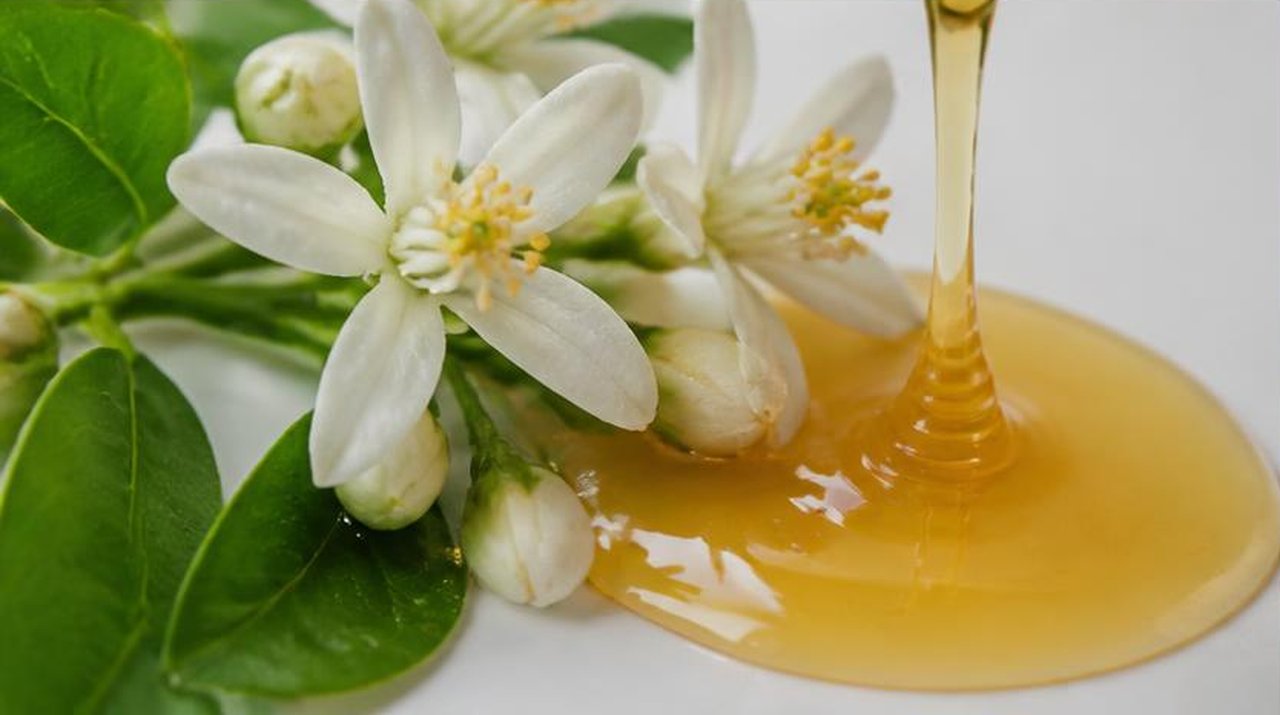
Put methyl anthranilate and an aldehyde in the same formula and you have not made a mixture. You have started a reaction. Weeks later the liquid is darker than you left it and the smell has moved. Nothing went wrong. The two materials did what they always do.
That reaction makes a Schiff base, and it is worth understanding early, because it is one of the few things in perfumery that carries on working after you have put the lid on.
What a Schiff base is
An amine and an aldehyde meet, lose a molecule of water between them, and join. The new bond is a carbon double bonded to a nitrogen. That is the whole of it.
In perfumery the amine is almost always methyl anthranilate, which smells of grape and orange flower and is one of the few nitrogen materials on a beginner's shelf. The aldehyde can be many things. Combine them and you get a material that smells like neither.
The reaction also runs backwards. Water and acid pull it apart again, slowly, releasing the original aldehyde over hours instead of minutes. That is why Schiff bases behave as fixatives: they are not holding the aldehyde down, they are handing it out in instalments.
Aurantiol, the one you will meet
The classic is Aurantiol, methyl anthranilate joined to hydroxycitronellal. The Good Scents Company describes it as floral, orange flower and linden blossom, with neroli and muguet facets. It is heavy, sweet and much longer lasting than either parent material, and it sits under a great many orange blossom accords.
It arrives as a yellow viscous liquid, which is your first clue about the next part.
The colour tells you it happened
Schiff bases discolour. Clear to yellow, sometimes to brown. The colour change is the reliable sign that the reaction has taken place, and it is why methyl anthranilate has a reputation for yellowing whatever it is put in.
The useful comparison is dimethyl anthranilate, which does not form Schiff bases and has little tendency to discolour. If a formula needs the anthranilate character but the colour is a problem, that swap is the standard answer. It is a different smell, so smell it before you commit to it.
Planning for it instead of being surprised by it
Three sensible positions, and the point is to pick one deliberately.
Buy the Schiff base ready made. Aurantiol is sold as a material. The reaction is done, the colour has settled, and what you weigh is what you get.
Make it on purpose. Combine methyl anthranilate with your chosen aldehyde, leave it somewhere dark, and let it mature before you build anything with it. Perfumers have been doing this for a century.
Keep them apart. If you want your aldehyde to smell like your aldehyde in six months, do not put methyl anthranilate beside it.
What you should not do is combine them by accident, then wonder in November why the trial you loved in August has gone amber and soft.
The safety part, which binds tighter than you expect
Hydroxycitronellal is restricted by IFRA for dermal sensitisation, under Standard 043, with limits that differ by product category and were tightened in Amendment 51. For category 4, which is where fine fragrance sits, the ceiling is 2.1% of the finished product.
Now do the arithmetic, because this is the part that catches people. Aurantiol runs to around 56% hydroxycitronellal by mass. A finished perfume may carry 2.1% of the constituent, so it can carry roughly 3.7% of the Schiff base before the limit is reached. The restricted thing is the ingredient; the material you actually weigh is governed by it without ever being named in the standard.
Alongside that, The Good Scents entry lists an IFRA Scientific Committee recommendation of 8% maximum in the concentrate for the Schiff base itself. The two figures are not measured against the same thing: one is a share of the finished product, the other a share of the oil before it is diluted. At a twenty percent concentration, 8% of the oil is 1.6% of the bottle, which makes that recommendation the tighter of the two. Reading a limit without checking what it is a percentage of is the commonest way to be confidently wrong about compliance.
All of those numbers move. Read the current Standard for your category and your supplier's safety data sheet before you make anything you intend to put on skin.